Malahide
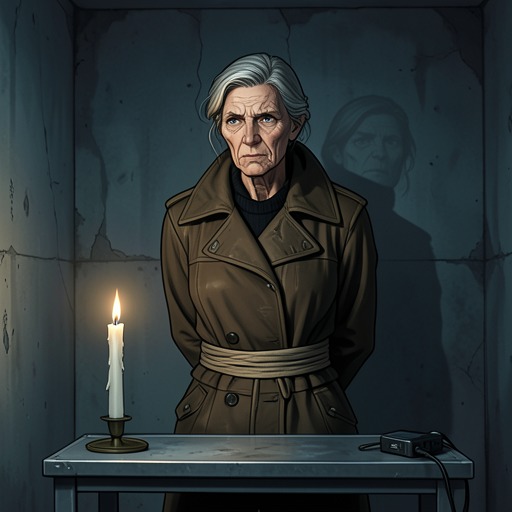
Say NothingMalahide was closely associated with Dolours Price in the final years of her life: a home there became the setting for a consequential 2010 interview and, after a period of hospital treatment, the place where she was found dead in 2013. The town’s significance in the account lies less in its geography than in this convergence of public disclosure, private illness and death.
Home and Interview
In February 2010, Irish News reporter Allison Morris went to interview Price at her home in Malahide. The Belfast Project’s recorded interviews had already ended, but the meeting helped set in motion a new round of attention to Price’s knowledge of the disappeared. After consulting her editor, Morris prepared a restrained article saying that Price intended to approach the Independent Commission for the Location of Victims’ Remains. Price told Morris that she had contacted the commission, although she had not.
Three days after Morris’s article appeared, Sunday Life published a more detailed account, attributing allegations about the disappearances to Price. It reported that she implicated Gerry Adams in the disappearance of victims and said that she had driven Jean McConville across the border to her death. These were claims attributed to Price, not findings established by the report. Malahide was thus the setting for an interview whose carefully limited treatment was quickly overtaken by a more explicit and politically charged version of her alleged disclosures.
A Separate Record
The Malahide interview was not the same as the later recorded conversations that became central to the dispute over the Boston College archive. After speaking with Morris, Price was interviewed by Ed Moloney under an agreement that her account would remain unreleased until after her death. Those conversations took place in Dublin: first in her room at St Patrick’s Hospital, where she was being treated for depression and PTSD, and then in a rented flat outside the hospital. Price discussed her past in detail, including her involvement in the IRA and the Unknowns. Keeping these interviews distinct from the Malahide meeting matters: the public controversy later drew on several records and accounts, not one interview at her home.
Return and Death
After a fall while drunk, Price was briefly hospitalised in January 2013, discharged herself and returned to her house in Malahide. She continued to drink and take Valium. On the morning of the day she died, her son Danny checked on her and found her asleep in bed. When he returned that evening, she had not moved and was no longer breathing. She was sixty-two. A postmortem found a toxic combination of antidepressants, sedatives and antipsychotics in her bloodstream; there was no alcohol in her system at the time of death.
The house in Malahide therefore marks the closing point of the account as well as the place from which Price’s final public disclosures began. Her testimony continued to matter after her death, while the circumstances of her illness and the return to her home give the location a private, starkly different significance from the public allegations first associated with it.